Alexander Grodzinski
-
Gesamte Inhalte
14.293 -
Benutzer seit
Beiträge von Alexander Grodzinski
-
-
Filmmusik ist nichts Neues für Hubert von Goisern, schrieb er doch schon 1995, zusammen mit Enjott Schneider, die Musik für SCHLAFES BRUDER. Bei "Filmmusik" handelt es sich um die Musik zu dem Film "Österreich: Oben und Unten". Dafür wurden Songs von Hubert neu arrangiert und neu eingespielt, teils mit Orchester.
Auf Filmmusik wurden einige von Hubert von Goiserns populärsten Titeln der letzten 25 Jahre aufgegriffen und, gemeinsam mit früheren Filmkompositionen, als Remix neu arrangiert. Der österreichische Musiker, Komponist und Orchesterleiter Robert Opratko setzt dabei gemeinsam mit Hubert von Goisern orchestrale Begleitungen seiner Melodien um, die gereift klingen. Nahe am Original. Aber tragender, schwebender – als wären sie eigens neu erfunden worden. Man hört bekanntes, als höre man es zum ersten Mal. Die Filmmusik vollendet das Goisern-Oeuvre. Vorerst.
-
From a Ralph McQuarrie interview from Star Wars Insider magazine I think:

Scheint also, als wäre der Roboter im Trailer eine ursprüngliche Idee McQuarries gewesen in den 70ern.

-
 1
1
-
-
Lange nicht gehört, aber immer wieder schön:
Richard Gibbs war von Ende der 70er bis 1985 Keyboarder in Elfmans Band OINGO BOINGO. Nach seinem Ausstieg widmete auch er sich verstärkt der Filmmusik. Er schrieb auch Musik für die TV-Serie BATTLESTAR GALACTICA.
THE BOOK OF STARS ist eine wundervolle Reise durch musikalische Schönheit, Trauer und Hoffnung. Das Hauptthema hat einen leicht indischen Anstrich, insgesamt ist die Musik schwebend-sphärisch mit wunderschönen Motiven und Themen. So begleitet die Musik den Zuhörer durch das Leben der Figuren bis zu ihrem Tod und noch weiter.
Ein kleiner, aber feiner Score, der sich in kürzester Zeit zu einem meiner Lieblingsscores gemausert hat.
-
1
-
-
In Rock we trust!
Iron Man!
The Others!
-
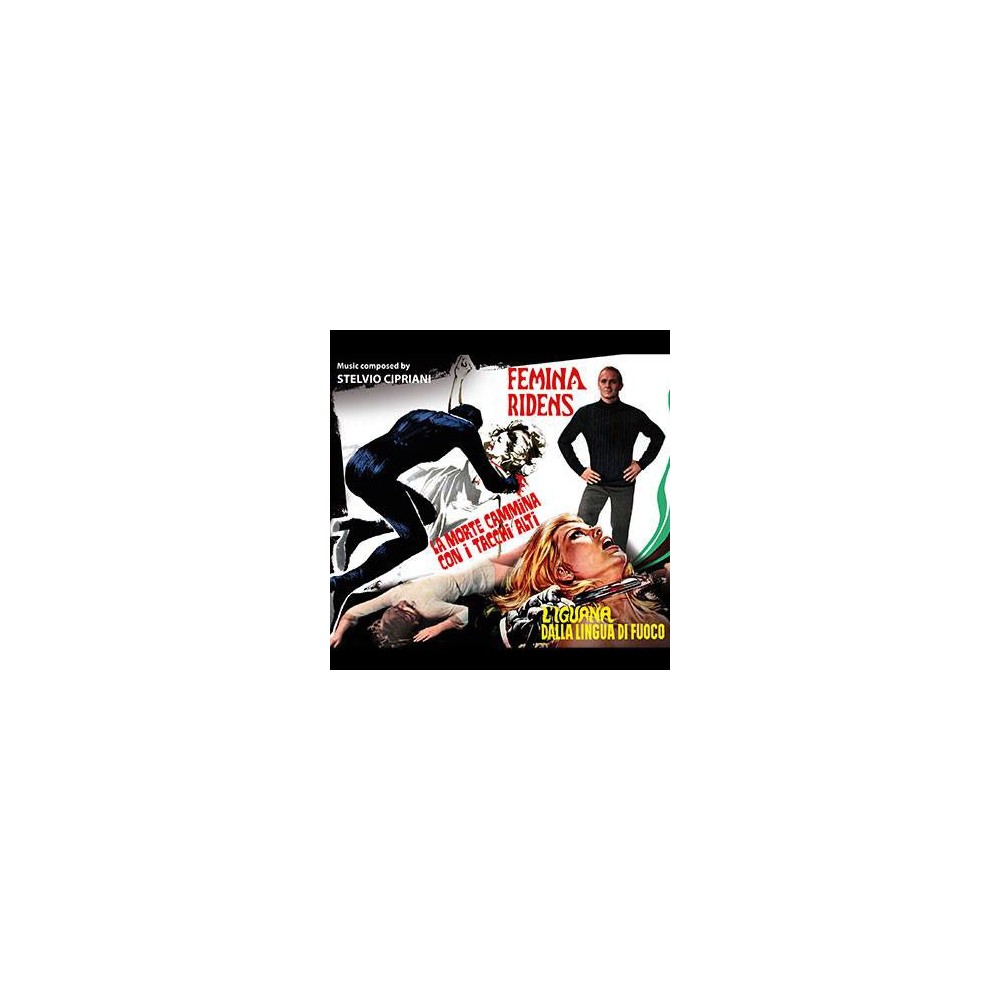
Hoping to renew and to satisfy the requests received, we wanted to present this set dedicated to the Maestro Stelvio Cipriani, containing three titles that our society had published back in 2006/2007, and that they were sold out. The three ost are presented in a new design and all strictly separated to allow an accurate and philological fruition, that will help to appreciate in the best possible way, these wonderful comments made by Maestro Stelvio Cipriani. We hope you enjoy!
FEMINA RIDENS
Digitmovies presents on CD the complete full stereo original motion picture score composed and conducted by Stelvio Cipriani for the 1969 movie “Femina ridens” (aka “The laughing woman”), directed by Piero Schivazappa and starring Philippe Leroy, Dagmar Lassander and Lorenza Guerrieri. The movie tells with grotesque tones the story of Doctor Sayer (Philippe Leroy), director of a philanthropic institute. A childhood trauma makes his life uncomfortable: he has a recurrent fear of being killed by a woman during a sexual act in a similar way as the scorpion female kills the male. Therefore Doctor Sayer, to meet trouble half-way, has got into the habit of torturing and killing his partner every time he has sex, at every week-end. But something in his perfect machine breaks down. Being unable to find his usual week-end-victim, he decides to trepan Mary (Dagmar Lassander), his secretary, to play his vicious games. But she surprises Doctor Sayer by subverting his tricks and tortures, and takes him on a diabolical journey that he could never have foreseen. He becomes the prey, while the real predator is the woman, who arranges a diabolical plan to kill the doctor: accomplishing the final triumph over the males, the last of a long series of revenges, those of Femina Ridens. This CD project was again made possible thanks to the friends of C.A.M., in whose archives the stereo master tape of the original 1969 album (C.A.M. SAG 9017) as well as the master of the whole stereo session recording have been carefully preserved. The album is surely one of the rarest items in the Film Music history. This CD gives the fans the chance to enjoy a very fascinating score, good example of refined Lounge Music especially created for the big screen by one of the greatest soundtracks composers, Stelvio Cipriani, adored by fans around the world (he is particularly popular in Japan). Maestro Cipriani has created a very varied score. The main theme is a romantic orchestral waltz introduced in Tr.1, then reprised by violin and piano (Tr.5). A magic and suspended version of the theme also features the voice of Edda DellʼOrso (Tr.8). Many different musical styles are represented in this score, including pieces between experimental and Lounge (Tr.2, Tr.10), a minuet with the voice of Edda simulating an orgasm (Tr.3), Bachian music with jazz arrangements performed by band and by the choir of Cantori Moderni di Alessandroni (Tr.4), shake music once again with the sensual voice of Edda (Tr.6), another shake sung by Olympia and accompanied by the Cantori Moderni choir (Tr.7) and a fabulous Western Deguello for orchestra and choir (Tr.11). Our CD encloses also eight inedit tracks discovered on the original session master tapes. These are mainly reprises of the album tracks including instrumental versions (Tr.13, Tr.16) and the off vocal base with orchestra and choir (Tr.19) of the vocal shake.
LA MORTE CAMMINA CON I TACCHI ALTI
“La morte cammina con i tacchi alti” (aka “Death walks on high heels”) shot in 1971 by director Luciano Ercoli (his second thriller movie after “Le foto proibite di una signora perbene”) is
a Giallo that follows the Argento- school, with a serial killer dressed in dark and a women destined for violent death. The Ercoli movie has its own particularity: mixing the thrilling sequences, black comedy tones and elements typical for the Agatha Christie novels, placing the plot in England. The real surprise of “La morte cammina con i tacchi alti” is the genial presentation of the murderʼs scene just after half-time of the movie, when the viewer has already been conquered by the sympathy of the murdered female protagonistʼs character. Digitmovies releases on record the complete original score composed and conducted by Stelvio Cipriani. This CD project was made possible thanks to the cooperation of the C.A.M. archives where the original stereophonic master tapes have been preserved since the recording session date. This score is built around variations of a romantic main theme, introduced with a gentle beat mood featuring the sensual vocal by Nora Orlandi in the Main Titles (tr.1). M° Cipriani has created this particular motif for Nicoleʼs character, a fascinating Parisian night-club singer, and thereby giving more space to the Lounge-style music throughout the whole score (tr.2, tr.4, tr.8, tr.10, tr.14, tr.15, tr. 16) so as to describe the atmospheare in that the girl lives. The Main Theme is then reprised with different arrangemens like tr.3 (slow and dreamy), tr.6 (an up-tempo valzer), tr.7 (a Bacharach-style version), tr.12 (a bossa vivace). The most dark moments of the story are underlined by a few but adequate tension cues ((tr.5, tr.9, tr.11) and by a long piece (tr.17) written for the scene of the final confrontation, where Stelvio Cipriani evokes a western-style motif written by him in the same year for the cult western movie “Blindman”. The movie as well as our CD conclude with the reprise of the Main Title theme featuring Nora Orlandiʼs whistle instead of her voice (tr. 18).
L'IGUANA DALLA LINGUA DI FUOCO
After the CD release of Stelvio Ciprianiʼs scores for Horror movies directed by Mario Bava (“Ecologia del delitto” and “Gli orrori del castello di Norimberga” - available on Digitmovies CDDM046), for another Horror “Un ombra nellʼOmbra” (available on Digitmovies CDDM052), Digitmovies is now glad to release on record the complete original motion picture score by M °Cipriani for the Giallo “Lʼiguana dalla lingua di fuoco”. This CD edition was made possible thanks again to the help of C.A.M., in whose archives the original stereo master tapes have been stored until today and to the help of M°Cipriani who approved our musical selection. The score is based on a romantic main theme introduced in the Main Titles with a beat arrangement for orchestra feat. vocal of Nora Orlandi (Tr.1). This motif is reprised with variations in Tr.4, a version for solo piano performed by Stelvio Cipriani and again vocalized by Nora Orlandi, then in a version for piano and symphonic orchestra (Tr.9) and ultimately in a semi Pop-flavoured version using harpsichord, piano, guitar and female voice (Tr.11). The dark side of the score is given by a series of macabre and suspense themes sometimes slow and mysterious (Tr.2, Tr.5, Tr.7, Tr.12, Tr.14), sometimes fast and rhythmical (Tr.6, Tr.10, Tr.13).
TRACK LIST
DISC 1
FEMINA RIDENS
01. WEEK-END WITH MARY 2.01 02. LOVE SYMBOL 2.20 03. HOT SKIN 2.43 04. CHORUS AND BRASS FUGATO 1.52 05. RENDEZ-VOUS IN THE CASTLE 1.48 06. SOPHISTICATED SHAKE 3.42 07. FEMINA RIDENS (Versione cantata) 3.22 08. MARY'S THEME 2.08 09. THE SHOWER 2.44 10. THE RUN IN THE ALLEY 2.48 11. FIGHT OF LOVE 3.21 12. PSYCHOTIC MIND 1.45 13. EROTIC SHAKE 1.37 14. FEMALE PRISONER 1.59 15. SEX CHASE 1.50 16. SAD MARY 1.00 17. LITURGICAL GALORE 2.51 18. MARY'S NIGHTMARES 3.25 19. FEMINA RIDENS (Versione base strumentale) 3.33
DISC 2
LA MORTE CAMMINA CON I TACCHI ALTI
01. FANTASIA TRAGICA (Titoli) 2:03 02. NIGHT CLUB GIRL 3:19 03. ATTIMI DI TENEREZZA 1:10 04. NIGHT CLUB GIRL (versione 2) 4:04 05. INSEGUITA & UN OSPITE INATTESO 3:47 06. SHOPPING 1:19 07. FELICITÀ (cena per due) 3:37 08. DOPO CENA (piano) 1:30 09. HALLORY MANO DI LEGNO 1:49 10. SENSUALMENTE 2:05 11. SPIATA 4:18 12. FELICITÀ (bossa) 2:05 13. IL COMANDANTE 2:18 14. AL PUB 2:49 15. SOLA IN CASA 2:12 16. FANTASIA TRAGICA (organo) 3:13 17. RIVELAZIONI DI UN ASSASSINO 5:38 18. FANTASIA TRAGICA (Finale) 1:09
DISC 3
LʼIGUANA DALLA LINGUA DI FUOCO
01. LʼIGUANA DALLA LINGUA DI FUOCO (Titoli) 2:40
02. INTRUSIONE 1:42 03. LINGUA DI FUOCO 1:02 04. NIGHT CLUB 2:35 05. INCONTRO ROMANTICO 2:43 06. FUGA & SCENA DʼAMORE 2:17 07. INTRUSIONE (versione 2) 1:49 08. INTERROGATORIO 1:44 09. SCOGLIERE 2:28 10. INTERROGATORIO (versione 2) 0:49 11. TEMA DʼAMORE 2 3:13 12. NUOVO DELITTO 3:30 13. INSEGUIMENTO MORTALE 1:51 14. AGGRESSIONE NOTTURNA 2:11 15. LOTTA & MORTE DELLʼASSASSINO 1:11 16. LʼIGUANA DALLA LINGUA DI FUOCO (Finale) 3:27
-
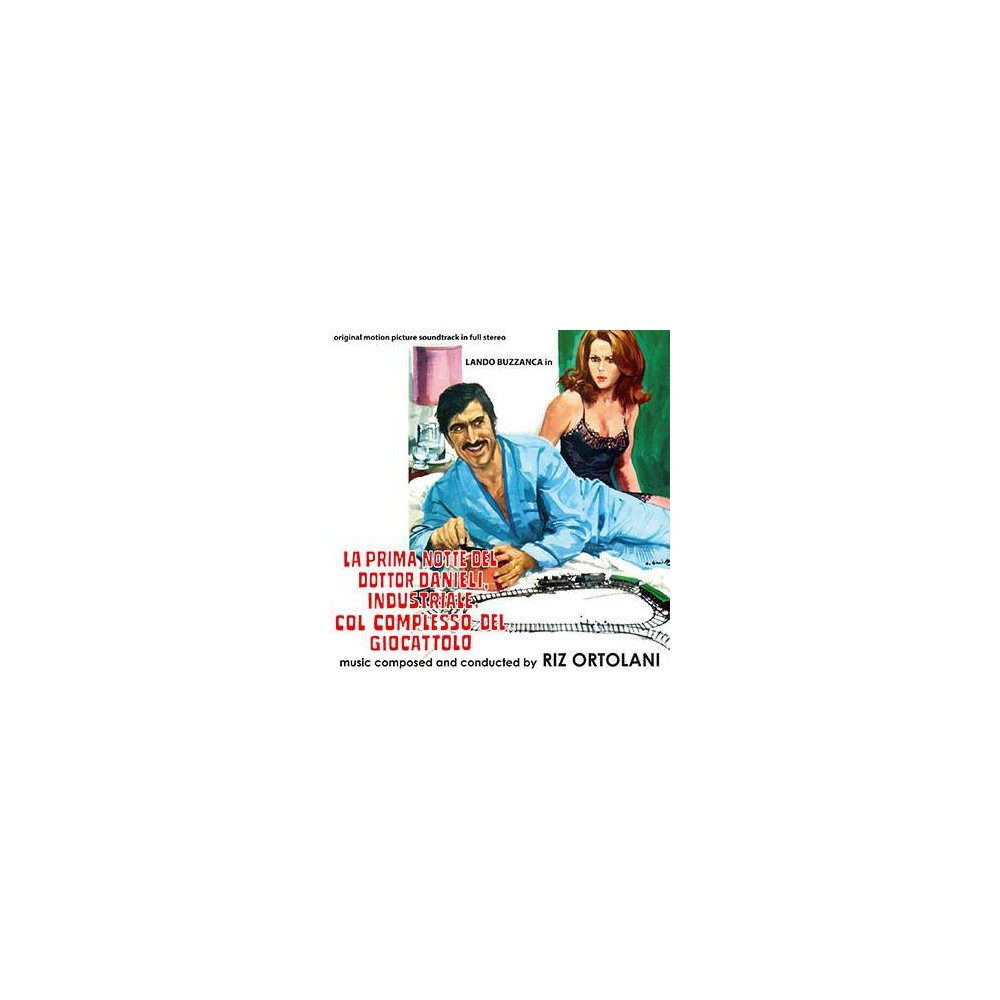
For the absolute first time on CD, Digitmovies releases the complete version of the wonderful music of Riz Ortolani from the films “The Lovemakers” (aka “La prima notte del dottor Danieli, industriale col complesso del... giocattolo”) and “The Naked Cello” (aka “Il Merlo Maschio”).
Soundtracks: “The Lovemakers” This CD (61 minutes) represents a dream come true for us. Finally, thanks to the approval of the Ortolani family, it was possible to make the CD. From “The Lovemakers” no music has ever been previously released. Ortolani composed a beautiful orchestral rock beat score used frequently during the film, alternating with lounge music such as a passionate version of the shake in a hotel night club. “The Naked Cello”
A 45 rpm EP was previously released (C.A.M. AMP 93) for this film. This soundtrack is based on a recurring classical score, followed by a cello and orchestra, and recalled again with a rock arrangement refrain. For both the soundtracks we were able to access the stereo master tapes from the recording sessions. “The Lovemakers”
Directors and Cast: Directed in 1970 by Gianni Grimaldi. Starring Lando Buzzanca, Françoise Prévost, Katia Christine, Alfredo Rizzo, Carlo Sposìto, Linda Sini, Enzo Garinei, Renato Malavasi, Ileana Riganò, Ira Fürstenberg, Saro Urzì, Franca Maria Giardina.
Plot: Carlo Danieli (Buzzanca) is a well-hung, womanizing business magnate from Sicily. He marries the beautiful Elena (Christine), but on their first night together he discovers she is still a virgin. Being used to promiscuous women, Carlo is shocked by the discovery and is not able to consummate the marriage. He confides in a doctor, but the doctor has a big mouth and soon the news is spread. Even Elenaʼs mother Donna Virginia (Prévost) finds out and so she goes to the couple to help them. Carlo tries every remedy possible. He puts himself in bizarre situations with double and triple meanings- usually quite vulgar. He starts drinking large quantities of Pozzillo, which was known for its therapeutic properties for those suffering from erection problems. Nothing seems to help, so Donna Virgina pays for a prostitute. Now Carlo finds his virility and reputation again. Notes about the film: This film had great success at the boxoffice, it came in just behind M*A*S*H by Robert Altman, and ahead of “The Garden of the Finzi-Continis” (aka a “Il giardino dei Finzi Contini”) by Vittorio De Sica, and “Tora! Tora! Tora!” by Richard Fleischer. The film was shot in the city of Acireale in Sicily. “The Naked Cello” Directors and Cast: Directed in 1971 by Pasquale Festa Campanile. Starring Lando Buzzanca, Laura Antonelli, Ferruccio De Ceresa, Gianrico Tedeschi, Elsa Vazzoler, Lino Toffolo, Gino Cavalieri, Adolfo Belletti, Franco Bisazza, Luciano Bianciardi, Gigi Bonfanti. Plot: The film centers around the life of a person in the Philharmonic Orchestra of the Arena of Verona. Niccoloʼ Vivaldi (Buzzanca) is a frustrated cellist in a rut in his career, scoffed by his colleagues, and neglected by his conductor. He starts photographing his beloved wife Costanza (Antonelli) in racy poses to then show off to his best friend, Cavalmoretti, and to his colleagues in the orchestra. Costanza loves her husband and accepts his request to appear nude in front of 20,000 spectators who crowd the Arena. Consumed by his obsession, Niccoloʼ ends up in a mental hospital where he continues to brag about having a beautiful wife.
TRACK LIST
01. LA PRIMA NOTTE DEL DR. DANIELI (Titoli) 5:12 02. LA PRIMA NOTTE DEL DR. DANIELI (Filodiffusione)3:21
03. LA PRIMA NOTTE DEL DR. DANIELI (due innamorati) 1:46
04. LA PRIMA NOTTE DEL DR. DANIELI (pettegolezzi) 4:41 05. LA PRIMA NOTTE DEL DR. DANIELI (al mare) 1:19 06. LA PRIMA NOTTE DEL DR. DANIELI (ballo primo) 2:03 07. LA PRIMA NOTTE DEL DR. DANIELI (al ristorante) 2:21 08. LA PRIMA NOTTE DEL DR. DANIELI (hotel shake) 3:29 09. LA PRIMA NOTTE DEL DR. DANIELI (ballo secondo) 3:17
10. LA PRIMA NOTTE DEL DR. DANIELI (viaggio di nozze) 5:24
11. LA PRIMA NOTTE DEL DR. DANIELI (ballo terzo) 2:58 12. LA PRIMA NOTTE DEL DR. DANIELI (Finale) 2:27
13. IL MERLO MASCHIO (Titoli) 2:28 14. IL MERLO MASCHIO (attimi di tenerezza) 2:00
15. IL MERLO MASCHIO (contrappunti dʼamore) 2:24
16. IL MERLO MASCHIO (violoncello per due) 2:20
17. IL MERLO MASCHIO (allegria) 2:21 18. IL MERLO MASCHIO (serenità) 1:37 19. IL MERLO MASCHIO (esercizi di stile) 1:30 20. FOTOGRAFIE 3:58 21. IL MERLO MASCHIO (Finale) 3:11
-
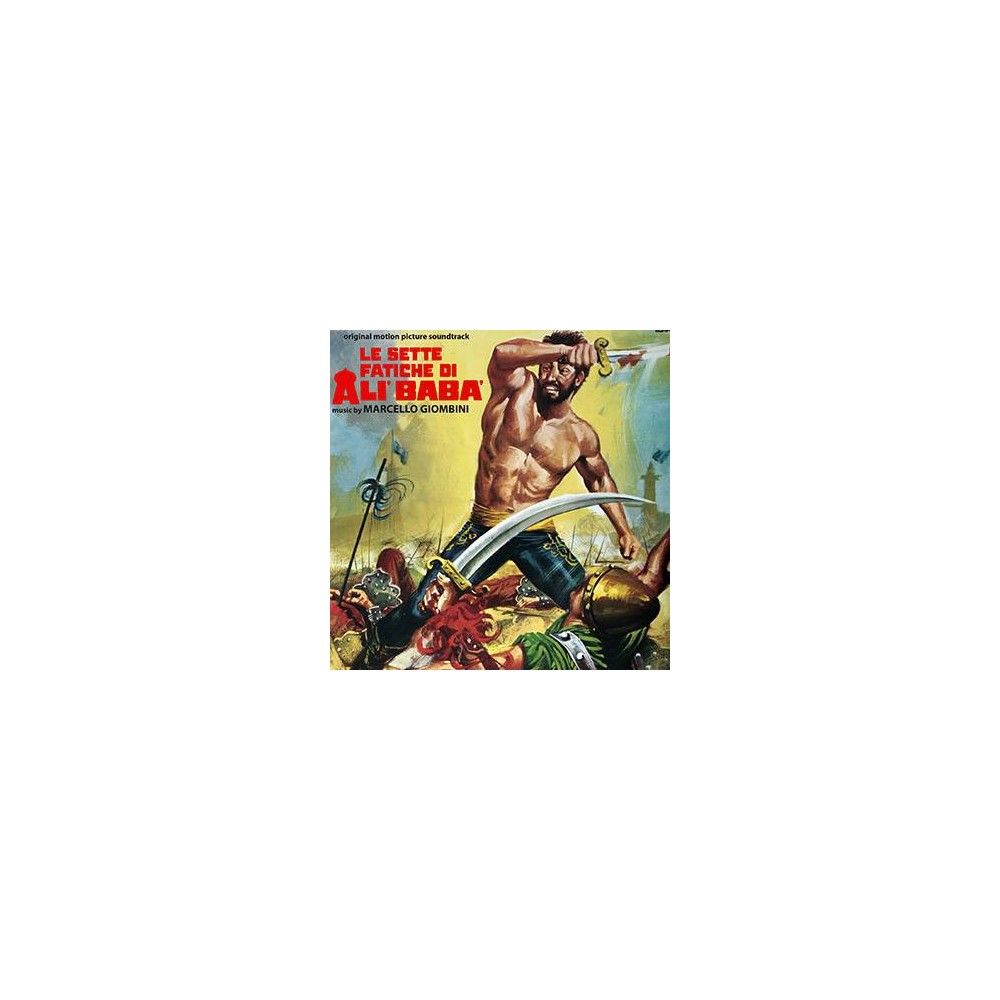
Digitmovies continues its journey through adventure movies releasing, for the first time on CD, the OST by Marcello Giombini for the film “The Seven Tasks of Ali Baba” (“Le sette fatiche di Alì Babà”). Soundtrack: For this CD (63:24 minutes) we were able to use the mono master tapes of the original recording. The author composed a recurring main score in a Middle Eastern Arabian Nights style, alternating between suspenseful music and music with violent and dramatic motifs for the battle scenes. Giombini transforms the main melody into a delicate and exotic love theme, contrasting with the exciting action scenes. Director and Cast: Directed in 1962 by Emimmo Salvi. Starring Rod Flash (real name Iloosh Khoshabe), Bella Cortez, Furio Meniconi, Salvatore Furnari, Omero Gargano, Aristide Massari, Mario Polleti, Yvonne Sire, Amedeo Trilli, Liliana Zagra. Plot: In the city of Sesame, Ali Baba is ordered to bring a golden crown to King Hassam. Hassam and his people have been taken over by the tyrant Mustafa. In order to save his people, Hassam must bring him the cityʼs treasure-the crown, but Ali Baba refuses to do it. He goes to the tyrant to try to bargain but is arrested and tortured. He is able to escape thanks to Loto, Hassamʼs daughter, who helps him flee. Ali Baba then gets an army together and hides them in the “Valley of the Shadows” to wait for Mustafa. Mustafa is defeated and held prisoner and Ali Baba is finally able to be with Loto.
TRACK LIST
01. LE SETTE FATICHE DI ALI' BABAʼ (seq.1 - Titoli) 2:26
02. LE SETTE FATICHE DI ALI' BABAʼ (seq.2) 2:45 03. LE SETTE FATICHE DI ALI' BABAʼ (seq.3) 1:36 04. LE SETTE FATICHE DI ALI' BABAʼ (seq.4) 7:09 05. LE SETTE FATICHE DI ALI' BABAʼ (seq.5) 2:37 06. LE SETTE FATICHE DI ALI' BABAʼ (seq.6) 2:22 07. LE SETTE FATICHE DI ALI' BABAʼ (seq.7) 2:12 08. LE SETTE FATICHE DI ALI' BABAʼ (seq.8) 2:17 09. LE SETTE FATICHE DI ALI' BABAʼ (seq.9) 1:23 10. LE SETTE FATICHE DI ALI' BABAʼ (seq.10) 1:06 11. LE SETTE FATICHE DI ALI' BABAʼ (seq.11) 3:26 12. LE SETTE FATICHE DI ALI' BABAʼ (seq.12) 1:41 13. LE SETTE FATICHE DI ALI' BABAʼ (seq.13) 3:09 14. LE SETTE FATICHE DI ALI' BABAʼ (seq.14) 1:20 15. LE SETTE FATICHE DI ALI' BABAʼ (seq.15) 3:33 16. LE SETTE FATICHE DI ALI' BABAʼ (seq.16) 1:57 17. LE SETTE FATICHE DI ALI' BABAʼ (seq.17) 2:35 18. LE SETTE FATICHE DI ALI' BABAʼ (seq.18) 3:13 19. LE SETTE FATICHE DI ALI' BABAʼ (seq.19) 1:35 20. LE SETTE FATICHE DI ALI' BABAʼ (seq.20) 1:23 21. LE SETTE FATICHE DI ALI' BABAʼ (seq.21) 4:00 22. LE SETTE FATICHE DI ALI' BABAʼ (seq.22) 1:51 23. LE SETTE FATICHE DI ALI' BABAʼ (seq.23) 2:11 24. LE SETTE FATICHE DI ALI' BABAʼ (seq.24) 2:00 25. LE SETTE FATICHE DI ALI' BABAʼ (seq.25 - Finale) 2:35
-

Christophe La Pinta est un des jeunes compositeurs de musique de film important à l’heure actuelle, il navigue entre la TV (“Diane, Femme Flic”, “Un Flic”,...) et le cinéma (“Ali Baba” de Pierre Aknine, “Joseph” et “ L’Enfant de L’Aube” de Marc Angelo, ...). Il avait déjà rencontré le réalisateur et scénariste Frédéric Tellier pour la fiction TV “Les hommes de l’ombre”, et c’est ensemble qu’ils ont composé la bande originale de L’Affaire SK1 pour laquelle ils ont tout naturellement fait appel à un orchestre classique afin d’accompagner la gravité et la noirceur du propos. Synopsis : Paris, 1991, Franck Magne, un jeune inspecteur fait ses premiers pas à la Police Judiciaire, 36 quai des Orfèvres, Brigade Criminelle. Sa première enquête porte sur l’assassinat d’une jeune fille. Son travail l’amène à étudier des dossiers similaires qu’il est le seul à connecter ensemble. Il est vite confronté à la réalité du travail d’enquêteur : le manque de moyens, les longs horaires, la bureaucratie...Pendant 8 ans, obsédé par cette enquête, il traquera ce tueur en série auquel personne ne croit. Au Fil d’une décennie, les victimes se multiplient. Les pistes se brouillent. Les meurtres sauvages se rapprochent. Franck Magne traque le monstre qui se dessine pour le stopper. Le policier de la Brigade Criminelle devient l’architecte de l’enquête la plus complexe et la plus vaste qu’ait jamais connu la police judiciaire française. Il va croiser la route de Frédé- rique Pons, une avocate passionnée, décidée à comprendre le destin de l’homme qui se cache derrière cet assassin sans pitié. Une plongée au cœur de 10 ans d’enquête, au milieu de policiers opiniâtres, de juges déterminés, de policiers scientifiques consciencieux, d’avocats ardents qui, tous, resteront marqués par cette affaire devenue retentissante : « L’affaire Guy Georges, le tueur de l’est parisien ».
TRACKLISTING
01. Premières photos 1’44
02. Avallon 1’58
03. Bateau 0’54
04. Maternité 1’03
05. 1er Parking 1’09
06. Jensen 1’17
07. SK1 5’23 0
8. Avis de recherche 2’30
09. Il s’appelle Guy Georges
10. La traque 2’37
11. Haie d’honneur du 36 1’36
12. Aveux 2’37
13. Mes sœurs de sang 2’59
14. Générique de fin 4’29
Durée totale : 33’17
MUSICIENS
Musiques composées par Christophe La Pinta et Frédéric Tellier
Arrangements : Christophe La Pinta
Orchestrations / Direction d’Orchestre : Cyrille Aufort
Partitions interprétées par le Philharmonia Orchestra
Violon solo : Stéphanie Gonley
Piano : Chloé Stefani
Programmations /Percussions : Christophe La Pinta
Samples d’Orgue par Hauptwerk
-
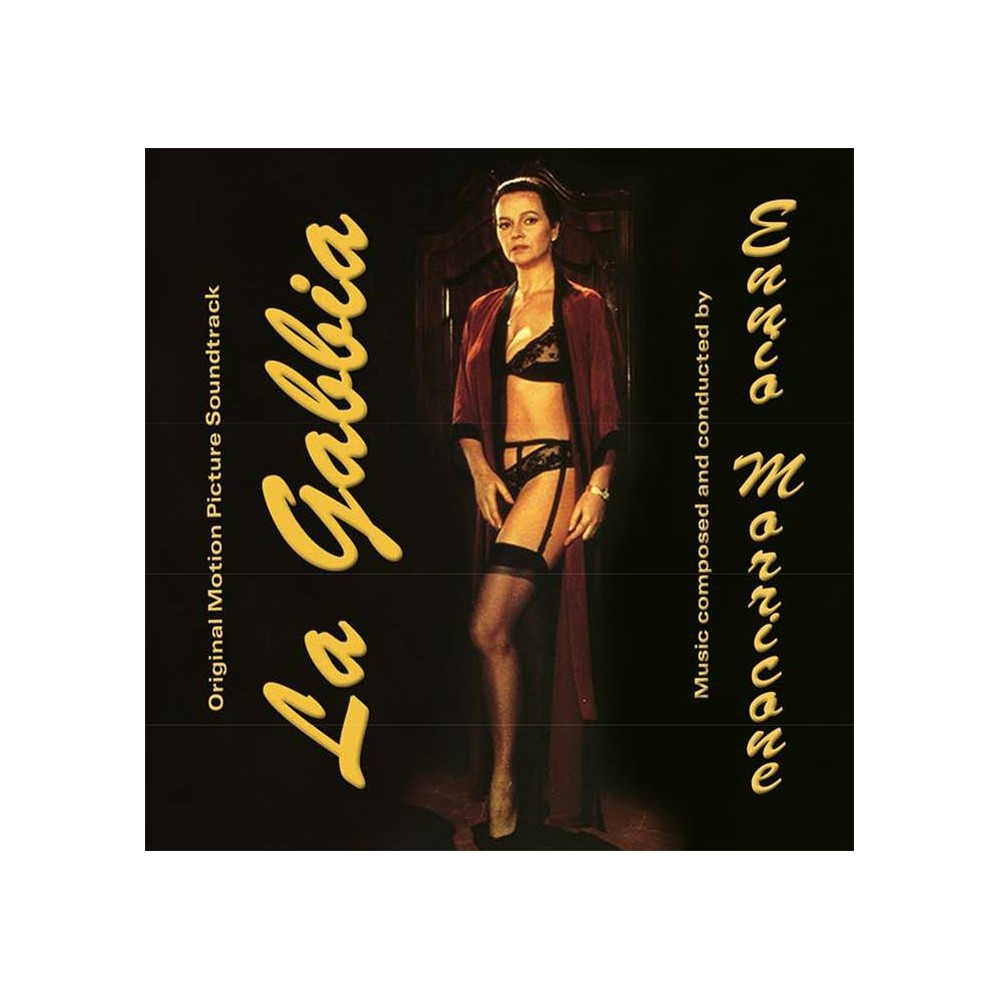
In 1985 Ennio Morricone was commissioned to compose the music for “La Gabbia”, erotic film, with dramatic notes, which was directed by Giuseppe Patroni Griffi ("Addio Fratello Crudele", "Metti, una sera a cena"). Ennio Morricone composed music in which dominates the melodic character. The Roman composer makes use of a wide sound spectrum, creating eclectic themes with musical influences from contemporary music to pop, to rock or jazz. With more than 52 minutes in length, this edition of Saimel contains three unpublished themes and additional music, never before published, in other two tracks. The Gabbia becomes another clear example of the inexhaustible talent of Ennio Morricone, an essential composer.
01. Il ritorno (5:32)
02. La gabbia (4:49)
03. Incatenato (5:03)
04. Provocazione (2:52)
05. Cadenze (3:50)
06. Laura (4:07)
07. Prigionero ** (5:08)
08. Passato - Presente ** (4:18)
09. Solo (2:09)
10. Improvviso (3:31)
11. La gabbia * (1:46)
12. Cadenze * (5:09)
13. Laura * (4:07)
** contains inedit material
* inedit track
-
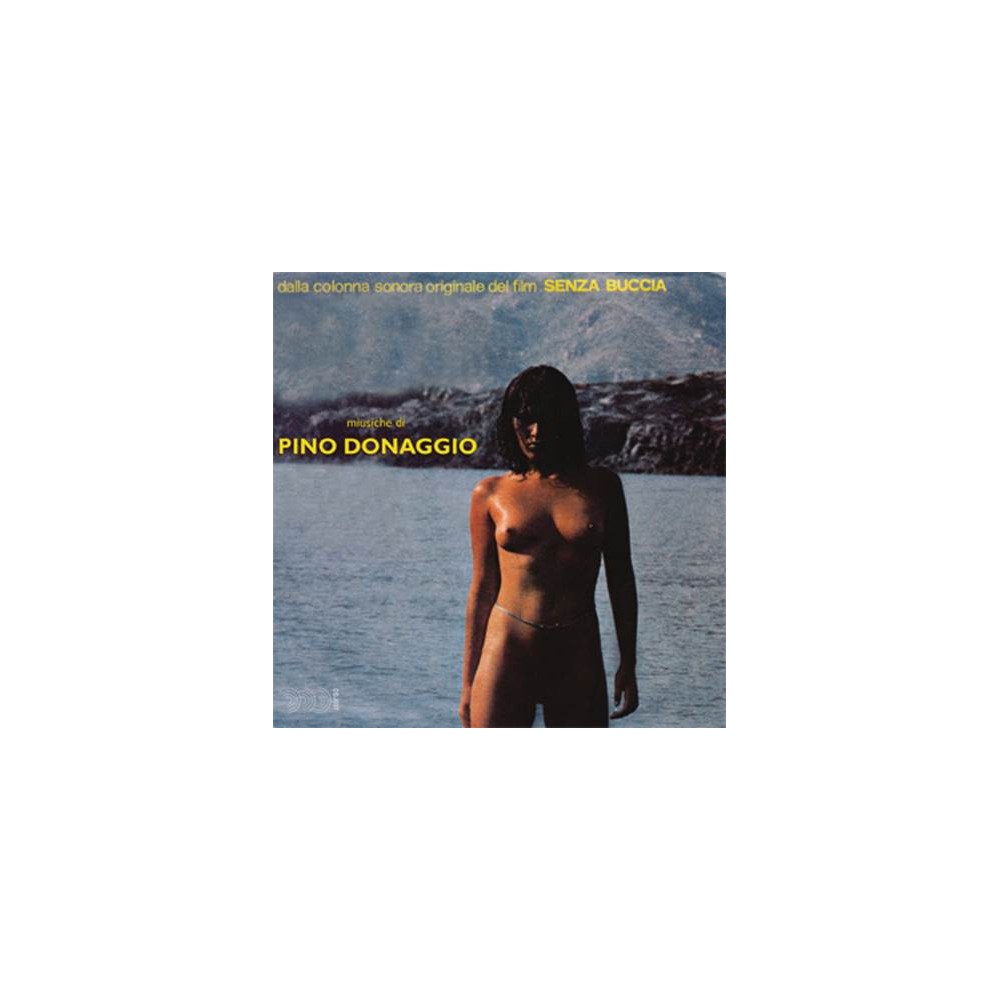
At last, we proudly present this production honoring the monumental career of the famous Venetian composer Pino Donaggio, an artist who has had many illustrious collaborations, past and present, from Brian De Palma to Joe Dante, from Lucio Fulci to Sergio Rubini and so on.
We are honored to release the music of this great Maestro as part of our DDJ series, and as such, it’s not surprising that our choice leans toward a certain adrenal sound. SENZA BUCCIA, which we dedicate to the memory of the beautiful Lilli Carati who recently passed away, was directed in 1979 by Marcello Aliprandi and stars Olga Karlatos, Ilona Staller and the charming Lilli. It’s a great score by the Maestro, who winks an eye to the period’s dance music in both its most energetic form and in the softer side of the Bee Gees’ sound.
On the “B side” is COSÌ FAN TUTTE, a very popular movie directed by Tinto Brass that saw the debut of the wonderful Claudia Koll. The score has that early ‘90s sound in the guise of the period and genre and completes this double bill devoted to Donaggio’s wonderful music and to Italian beauties.
The CD is packaged in a jewel case with a 12-page booklet designed by Alessio Iannuzzi that’s full of original images from the films. Audio mastering by Claudio Fuiano and liner notes (in Italian and English) by Fabio Babini.
Tracklist:
SENZA BUCCIA
1 LADY FINE 3:48
2 DANIELE E ADRIANA 3:01
3 SKIN DEEP 3:34
4 NUDI AL SOLE 2:46
5 BALLATA NORVEGESE 2:18
6 PRANZO A SORPRESA 3:03
COSI FAN TUTTE
7 MOZARTIANA 4:20
8 L’ALTANA DI VENEZIA 1:50
9 DIANA 2:52
10 SERATA NEBBIOSA 0:51
11 RIDERE…RIDERE…RIDERE 2:43
12 CIACOLE 0:44
13 PORNO IN TV 3:07
14 LOVE RAIDER 5:26
15 IL NEGOZIO 1:20
16 IN MACCHINA 0:44
17 SOGNO EROTICO 1:29
18 CAMPIELLO DEGLI… 0:29
19 BOTTA D’ALLEGRIA 4:13
20 LETTERA A MARIKLA 2:48
-
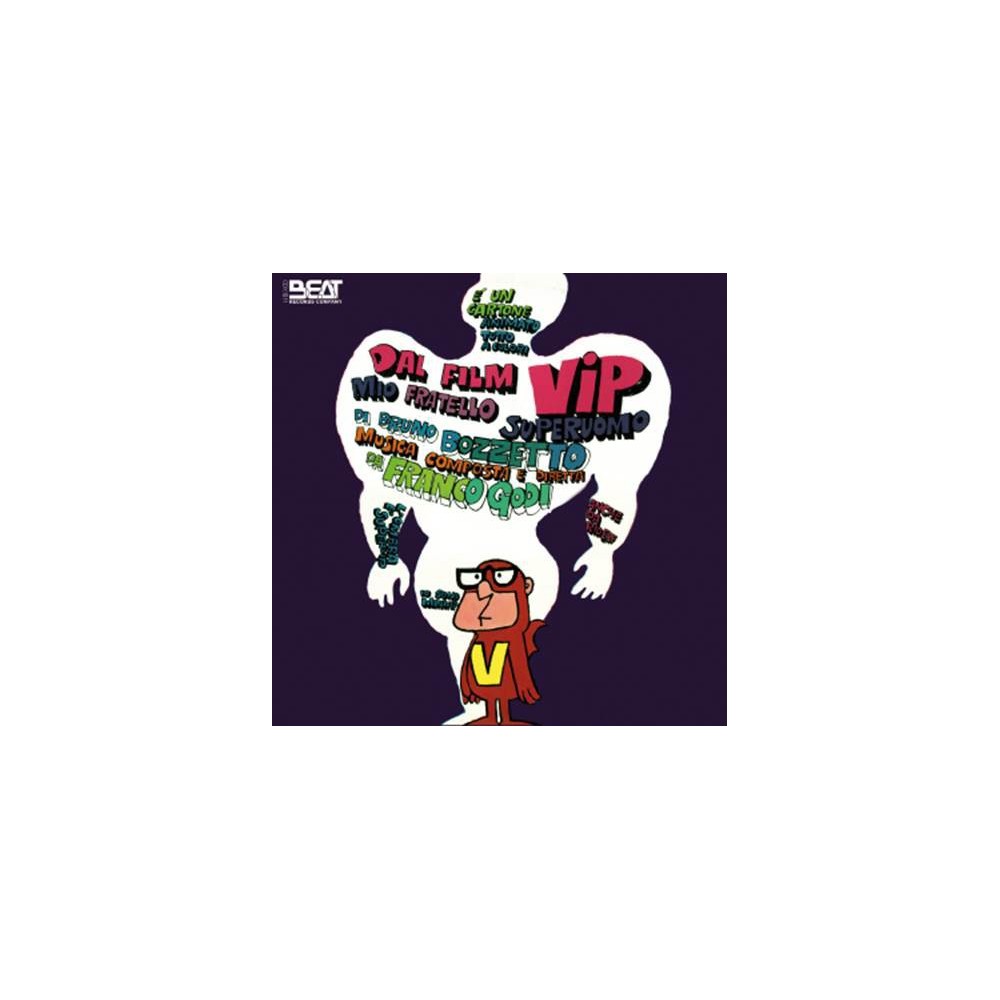
In 1968, the animated movie VIP MIO FRATELLO SUPERUOMO was released, a genial story about consumerism told through the pen of the great cartoonist and director Bruno Bozzetto. MiniVip and SuperVip are two superhero brothers who get mixed up in an international conspiracy involving Happy Betty, owner of a market chain that thanks to a peculiar gadget is able to force people to buy things exclusively from her stores.
The score by Franco Godi is possibly the most suitable soundtrack that could have been created for this cartoon. It’s full of great sonorities of the period, still fresh and without age, sparkling with sumptuous orchestrations, lounge style and funk derivations. Herbert Pagani and Nora Orlandi (with her vocal group 4+4) both recorded songs for the album, bringing an additional element of quality to the artistic landscape.
We present with this CD another useful gadget, a thin cardboard tunnel-box slipcase featuring the covers of both VIP MIO FRATELLO SUPERUOMO and WEST & SODA (another score for a cartoon of the same name by the same director, coming soon in January 2015), which will allow you to display the two soundtracks dedicated to the animated movies of the wonderful Bruno Bozzetto together on the shelf.
The CD is packaged in a jewel case with a 12-page booklet full of original Bruno Bozzetto artwork, with audio mastering by Claudio Fuiano and liner notes (in Italian and English) by Andrea Morandi (CIAK magazine).
Tracklist:
1 VIP 2:50
2 MENDEL 1:45
3 IN CERCA DI LISA 2:30
4 LA CROCIERA 1:40
5 L’AUTO DEL COLONNELLO 1:01
6 ESITATION 1:07
7 NAUFRAGHI E ISOLA RELAX 1:30
8 VOLO ED ESPLOSIONE MISSILE 0:47
9 ADAMO JEPPAMELA 2:09
10 METTI UN TIGRE NEL DOPPIO BRODO 2:55
11 PESCI E MARE 1:44
12 VIP E IL COLONNELLO 0:53
13 LISA 1:05
14 MINIVIP… SCAPPA! 1:27
15 VIP E LOTTA 1:08
16 VIP E LA GALLERIA 0:50
17 LISA 2:02
18 TERRA E FUGA MINIVIP 0:59
19 HAPPY BETTY 2:06
Bonus Track:
20 VIP (alternate ending) 2:50
21 PESCI E MARE (alternate take) 1:07
22 VIP MIO FRATELLO SUPERUOMO (suite) 1:49
23 ADAMO JEPPAMELA (alternate take) 1:52
24 VIP E IL COLONNELLO (alternate take) 0:52
25 IN CERCA DI LISA (alternate ending) 2:29
26 HAPPY BETTY (piano solo) 1:43
27 VIP (base musicale) 2:50
28 METTI UN TIGRE NEL DOPPIO BRODO (base musicale – versione lunga) 3:26
-
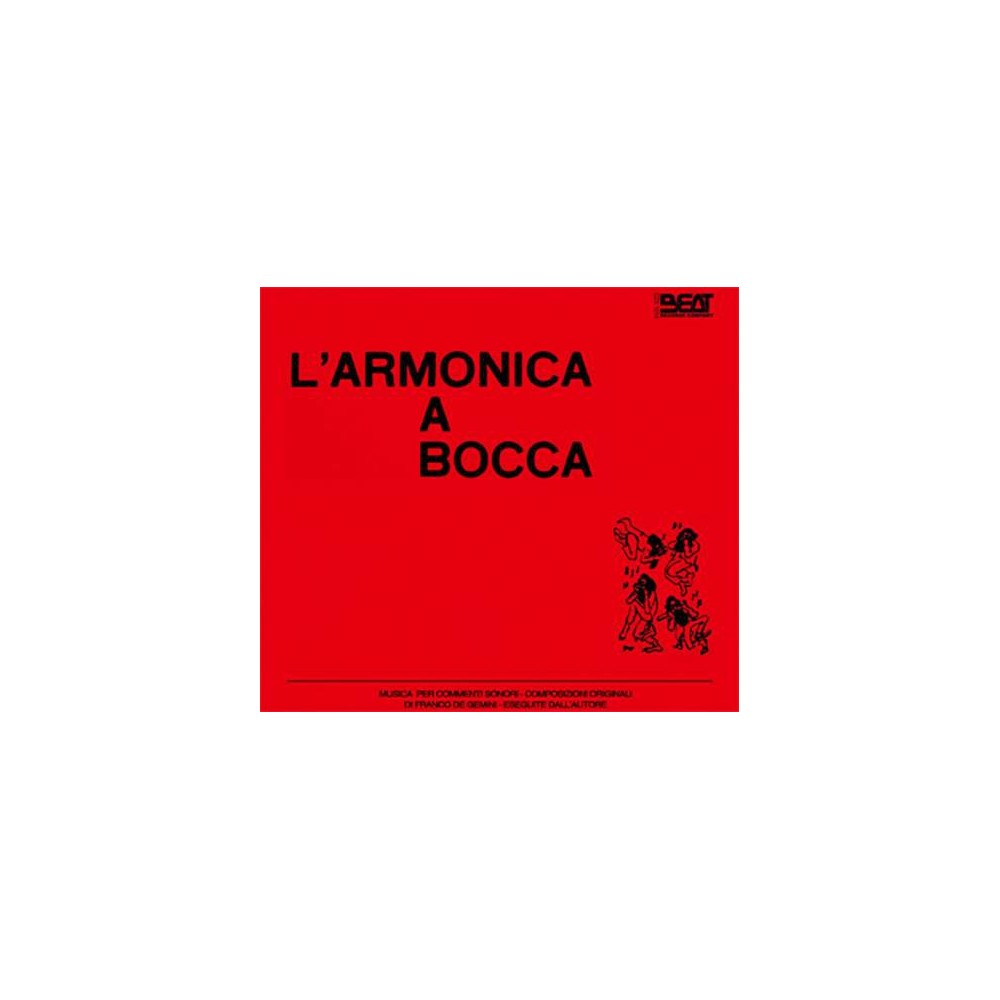
The third release dedicated to the monumental career of the Ferraran musician is a production that features two separate albums, “L’armonica a bocca” (1969) and “L’armonica a bocca di Franco De Gemini” (1970).
At the time speaking, the two LPs were released with a simple red cover that featured four harmonica players hand drawn by a contemporary artist, from which we have again taken the theme. Both albums were recorded soon after the artistic affirmation that occurred thanks to his performance on the score for C’ERA UNA VOLTA IL WEST, after which music featuring Franco De Gemini’s harmonica was more in demand.
“L’armonica a bocca,” created together with his friend Alessandro Alessandroni and other composers, is full of cues that would have become great successes in Beat Records’ catalog, mainly in the label’s involvement with syncs (library music). Meanwhile, “L’armonica a bocca di Franco De Gemini” is a drier album, almost experimental, and dedicated to synchronization in a minimalist key.
Two LPs with opposite features that rightly widen your cultural spectrum regarding the work of one of the best harmonica players of all time, now available together as the third chapter of the series dedicated to him. The CD is packaged in a slim jewel case with maxi-inlay and external obi, fully remastered and featuring liner notes by Daniele De Gemini.
Tracklist:
L‘ARMONICA A BOCCA DI FRANCO DE GEMINI
1. MARE DI ALASSIO 2:56
2. CIAO DAL MURETTO DI ALASSIO 2:46
3. PRIMA DI SERA 2:36
4. BASSA BEAT 2:19
5. SOLO DOMANI 3:00
6. BEAT 700 2:57
7. SULLA RIVIERA 2:37
8. RICORDO CAMPESTRE 2:45
9. LA SCORSA ESTATE 3:11
10. HOLIDAY GARDEN 2:42
L‘ARMONICA A BOCCA
11. SILENZIO AL CAMPO 1:40
12 CIMITERO DI GUERRA 1:06
13. TRADOTTA 0:54
14. PASSANO LE TRUPPE 1:31
15. L’ULTIMA NOTTE AL CAMPO 2:21
16. LA VALLE SOLITARIA 1:59
17. SENTIERO DEL WEST 1:09
18. GIARDINO D’INFANZIA 2:18
19. DRAMMA NELLA CITTA’ 1:57
20 ASTROPOLIFONICA 3:21
21. APOLLO DODICI 1:49
22. SHOW GROTTESCO 1:31
23. LA BURLA 0:55
24 ULTIMA CASA 1:30
25. MALINCONIA DI PERIFERIA 1:29
26. IL BLUES DELL’ARMONICA 3:46
-
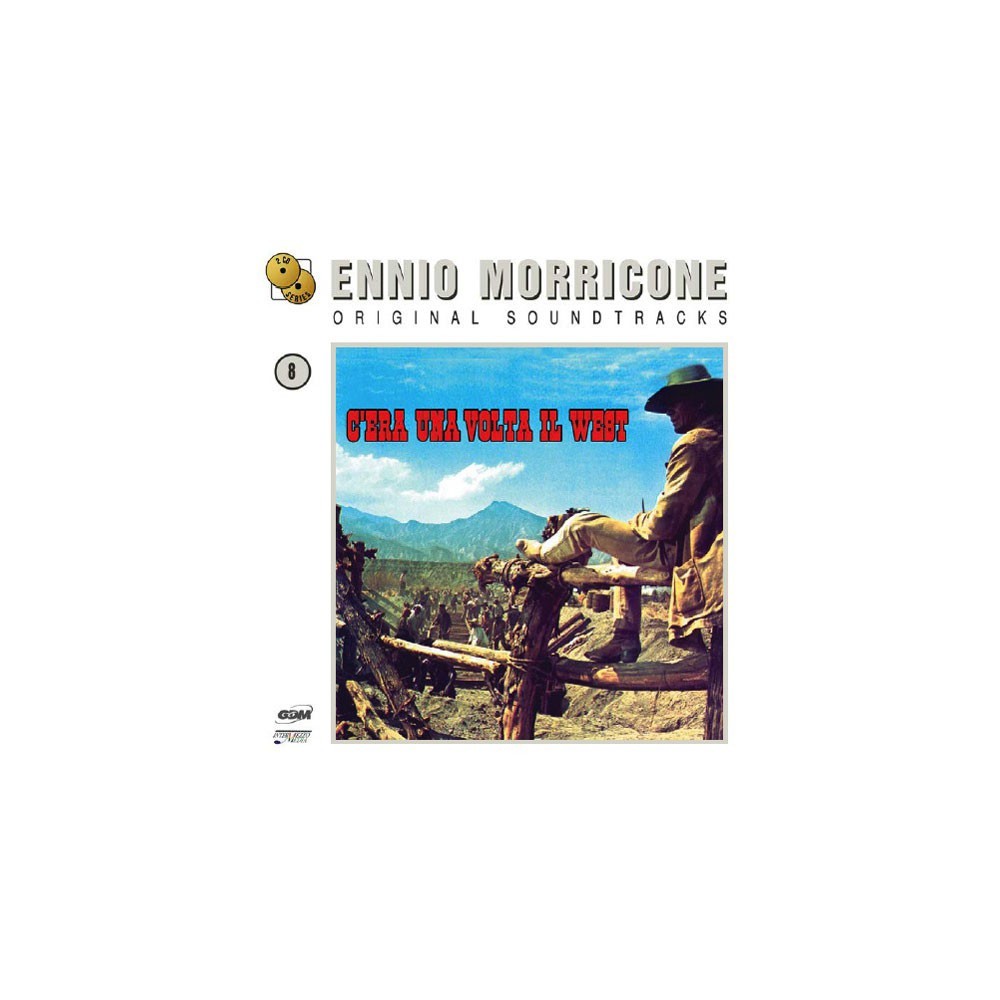
Music Composed by Ennio Morricone
GDM / IMR - Limited Collector's Edition of 300 units
2-CD
PER UN PUGNO DI DOLLARI (For a Fistful of Dollars) 1964
Italy had already 25 Spaghetti Westerns ready when director Sergio Leone made his first one in 1964 called For a fistful of dollars. Leone considered Henry Fonda but asked James Coburn to play the role of “The man with no name”. But Coburn was too expensive. Charles Bronson said no and that it was the worst script he had ever seen. Richard Harrison also turned it down. Leone then offered the part to “Rawhide” (1959) star Eric Fleming who declined and suggested his co-star Clint Eastwood. We all know how that ended. The film For a fistful of dollars was a remake in a different setting of the Japanese samurai film Yojimbo (1961). Akira Kurosawa, director and co-screenwriter of Yojimbo sued the filmmakers for breach of copyright. Ennio Morricone and Sergio Leone knew each other since 3rd grade school days. Morricone gave Leone is availability to write the music for his new film even if the director was not keen on using a yet unknown composer for his film. But Michele Lacerenza’s initial trumpet performance on the score made him change his mind. As it is known both the movie and the score had huge success and the Morricone’s famous
western style started here and then it has been copied all over the world ever since. The relationship between these two artists continued for all the Leone movies that were not only westerns until the director’s death happened in Rome the age of 60. Ennio Morricone with this movie had his big launch pad and actually he is still active, after having written about 500 scores for cinema and TV.
C’ERA UNA VOLTA IL WEST (Once Upon a Time in the West) 1969
Ennio Morricone had composed the music score of Once Upon a Time in the West using the original script for the film, so the most part of the music was recorded before the film was shot. Then during the production of the film, the script was changed several times. However Sergio Leone directed the film scenes around the recorded music played on the set with a tape recorder. Edda dell’Orso with this score became famous around the world. Her extraordinary soprano voice with a three octave range has been as instruments in many scores. Franco de Gemini plays the harmonica in his unique way so that was asked his collaboration by Morricone and many other composers for many movies and not only westerns. Typical for Ennio Morricone was the use of atonal music like in track 19: L’attentato that worked very effective in the film. The use of exceptional instruments in the orchestra became the trademark of the composer. This time he used the harmonica, banjo and electric guitar. A soundtrack LP was released by RCA when the film came out. The eventful music for the film made that the soundtrack sold more than 10 million copies worldwide. In Holland, where Ennio Morricone received his first platinum album, the LP was nr. 1 in the LP top 50 for years and sold over 800.000 copies. The soundtrack LP had 13 tracks and the running time was 37:40. In those days it was usual to re-arrange and rerecorded soundtracks for LP releases. This CD has the original film version of the score remastered and almost complete. It is a masterpiece and a classic.
PER UN PUGNO DI DOLLARI
Total Time: 38:08
01 Titoli 2:58
02 Quasi morto 1:40
03 Musica sospesa 1:02
04 Square dance 1:36
05 Ramon 1:05
06 Consuelo Baxter 1:18
07 Doppi giochi 1:41
08 Per un pugno di dollari 1:26
09 Scambio di prigionieri 0:55
10 Cavalcata 3:29
11 L'inseguimento 2:25
12 Tortura 9:31
13 Alla ricerca dell'evaso 1:22
14 Senza pietà 2:08
15 La reazione 2:36
16 Per un pugno di dollari (# 2) 1:49
17 Per un pugno di dollari (finale) 1:09
C'ERA UNA VOLTA IL WEST
Total Time: 64:52
01 C'era una volta il west 3:43
02 L'uomo 1:03
03 Il grande massacro 2:40
04 Arrivo alla stazione 0:55
05 L'orchestraccia 2:25
06 L'america di Jill 2:47
07 Armonica 2:27
08 La posada n. 1 1:39
09 Un letto troppo grande 1:32
10 Jill 1:4711 Frank 1:52
12 Cheyenne 1:16
13 La posada n. 2 1:33
14 La posada n. 3 1:19
15 Epilogo 1:14
16 Sul tetto del treno 1:19
17 L'uomo dell'armonica 3:30
18 In una stanza con poca luce 5:08
19 L'attentato 4:41
20 Ritorno al treno 0:57
21 Morton 1:36
22 Come una sentenza 3:08
23 Duello finale 3:35
24 L'ultimo rantolo 1:44
25 Nascita di una città 4:25
26 Addio a Cheyenne 2:38
27 Finale 4:08
-
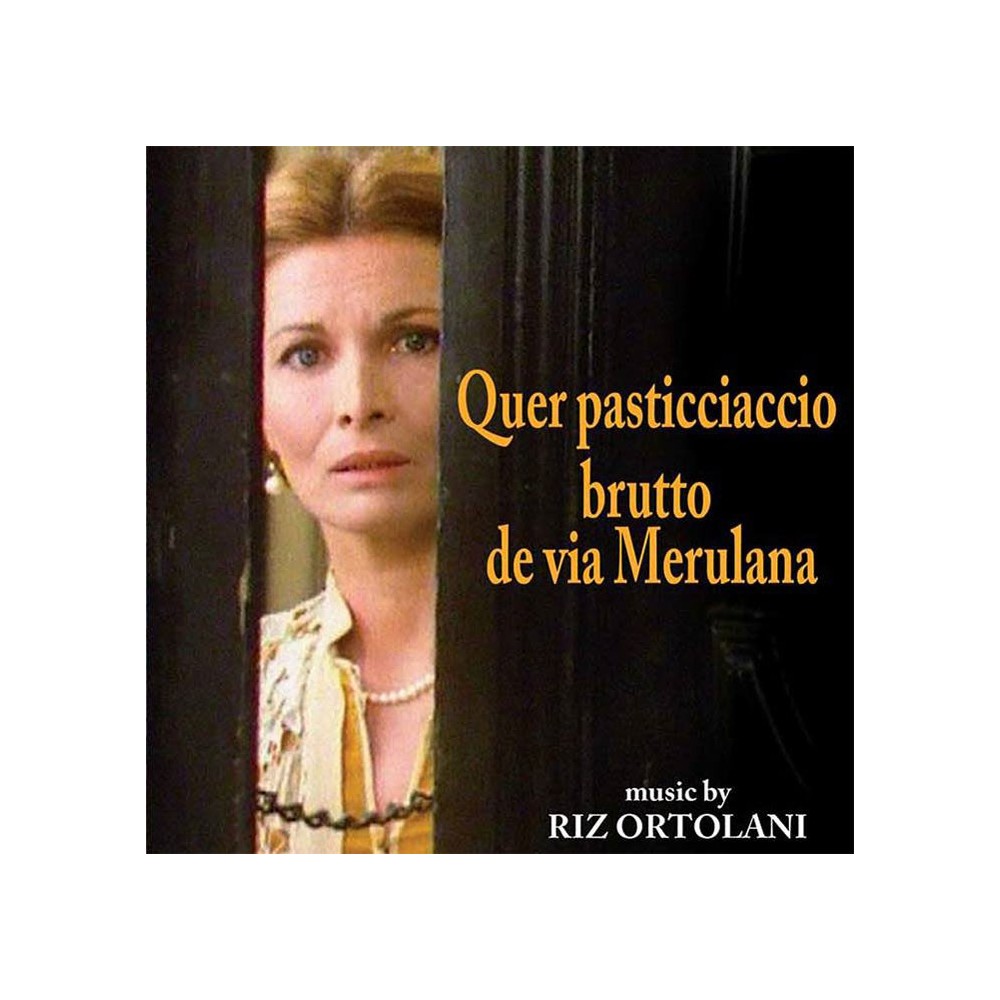
Music Composed by Riz Ortolani
GDM / IMR - Limited Collector's Edition of 300 units
QUER PASTICCIACCIO BRUTTO DE VIA MERULANA (aka THAT AWFUL MESS ON MERULANA AVENUE) is a four episodes TV mini-series directed in 1983 by Piero Schivazappa, based on the homonymous novel by Carlo Emilio Gadda and starring Flavio Bucci, Scilla Gabel, Jean Boissery, Pietro Biondi, Franco Javarone, Micaela Pignatelli, Giacomo Piperno, Maria Luisa Santella, Massimo Sarchielli, Simonetta Stefanelli, Eleonora Morana, Paola Morra, Franca Scagnetti, Bruno Scipioni, Bruno Tocci. In 1959 the novel was adapted for the big screen with the title UN MALEDETTO IMBROGLIO directed by Pietro Germi. Rome, March 1927. During the early years of Fascism, the Commissioner of Police Squad of Francesco "Don Ciccio" Ingravallo (Bucci), witty and proud of Molise region roots, is in charge of nvestigating a jewel theft against elderly woman from Veneto, the widow Menegazzi. Later in the same building that had been the crime scene of the robbery, the wife of a wealthy man, Mrs. Liliana Balducci (Gabel) is killed. The location of the robbery and the murder is a dark building in Via Merulana 219, known as the "Palace of the gold", located not far from the Colosseum. The story starts with the description of the environment around lady Balducci and it widens to the Castelli Romani area from where the lady’ housekeepers and the "grandchildren" originate, girls who she welcomed as daughters to compensate for loneliness and lack of maternity.
Around a crowd of extras: the mawkish and wizened Countess Menegazzi, a victim of theft, the Commander Angeloni "prosciuttofilo" (Biondi), the sergeants of the police, the police of Marino hunt for clues in the countryside, the blurred figures of maids and grandchildren. The noir plot has no
solution and does not end with the discovery of the guilty one. According to the conception of Gadda reality is too complex and kaleidoscopic to be explained and reduced to a logical rationality. For him, life is a messy mess, a "Mess" of things, people and languages. Riz Ortolani has composed an orchestral OST with a recurring main theme with the typical sounds of the twenties, alternated with a melancholy love theme which is then reprised by vocal version in the end credits, and various suspense background themes. At the time,
RCA released only a 45 rpm single containing the main theme featured in the opening credits and the End Titles song played by Erika Grassi. For this CD with a the total time of 50:40 the stereo master tapes of the original session were used.
1. QUER PASTICCIACCIO BRUTTO DE VIA MERULANA (titoli) 2:31
2. QUER PASTICCIACCIO BRUTTO DE VIA MERULANA (seq.2) 1:06
3. QUER PASTICCIACCIO BRUTTO DE VIA MERULANA (seq.3) 2:34
4. QUER PASTICCIACCIO BRUTTO DE VIA MERULANA (seq.4) 2:24
5. QUER PASTICCIACCIO BRUTTO DE VIA MERULANA (seq.5) 1:08
6. QUER PASTICCIACCIO BRUTTO DE VIA MERULANA (seq.6) 1:17
7. QUER PASTICCIACCIO BRUTTO DE VIA MERULANA (seq.7) 2:24
8. QUER PASTICCIACCIO BRUTTO DE VIA MERULANA (seq.8) 1:47
9. QUER PASTICCIACCIO BRUTTO DE VIA MERULANA (seq.9) 2:45
10. QUER PASTICCIACCIO BRUTTO DE VIA MERULANA (seq.10) 1:12
11. QUER PASTICCIACCIO BRUTTO DE VIA MERULANA (seq.11) 1:33
12. QUER PASTICCIACCIO BRUTTO DE VIA MERULANA (seq.12) 2:22
13. QUER PASTICCIACCIO BRUTTO DE VIA MERULANA (seq.13) 4:50
14. QUER PASTICCIACCIO BRUTTO DE VIA MERULANA (seq.14) 1:13
15. QUER PASTICCIACCIO BRUTTO DE VIA MERULANA (seq.15) 2:02
16. QUER PASTICCIACCIO BRUTTO DE VIA MERULANA (seq.16) 1:06
17. QUER PASTICCIACCIO BRUTTO DE VIA MERULANA (seq.17) 1:44
18. QUER PASTICCIACCIO BRUTTO DE VIA MERULANA (seq.18) 1:38
19. QUER PASTICCIACCIO BRUTTO DE VIA MERULANA (seq.19) 2:19
20. QUER PASTICCIACCIO BRUTTO DE VIA MERULANA (seq.20) 2:00
21. QUER PASTICCIACCIO BRUTTO DE VIA MERULANA (seq.21) 1:12
22. QUER PASTICCIACCIO BRUTTO DE VIA MERULANA (seq.22) 2:13
23. LA VERITA’ (titoli di coda) 3:35
24. LA VERITA’ (titoli di coda alternativi con intro) 3:47
TT 50:40
-
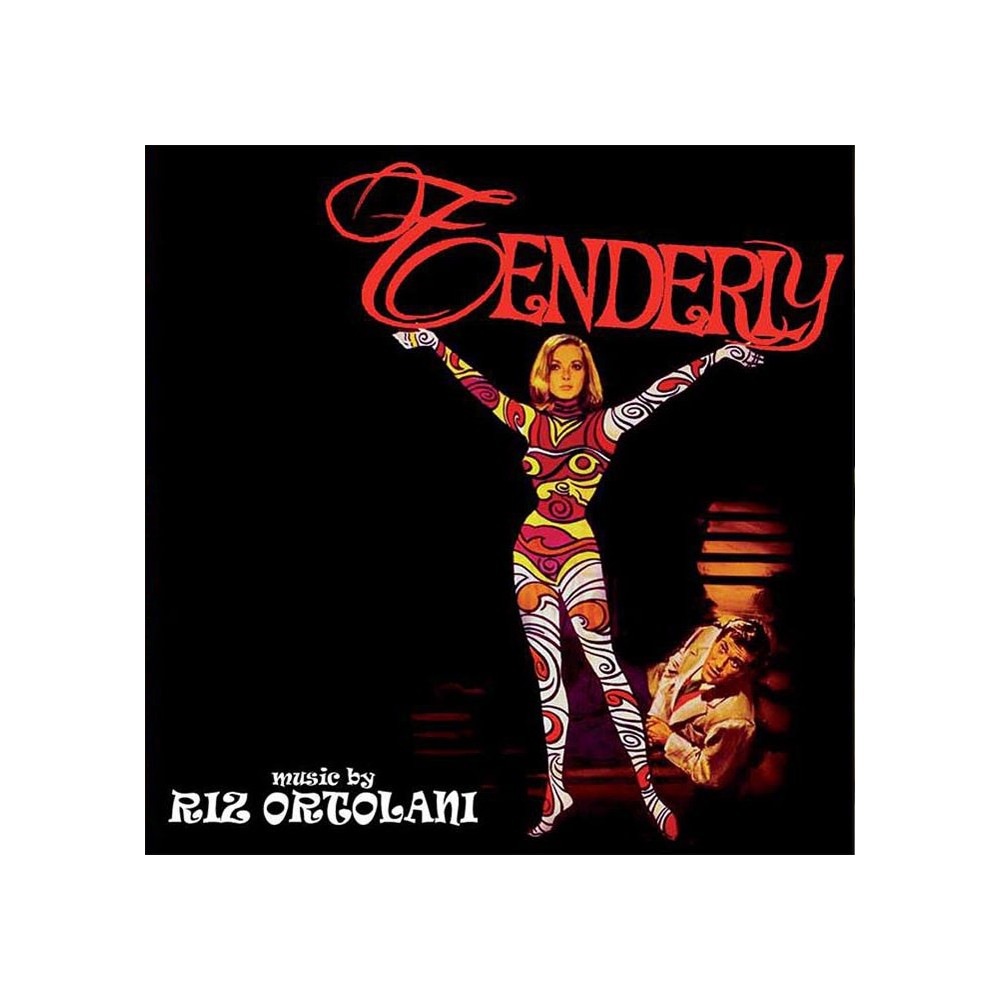
Music Composed by Riz Ortolani
GDM / IMR - Limited Collector's Edition of 300 units
TENDERLY aka THE GIRL WHO COULDN’T SAY NO is a comedy directed in 1968 by Franco Brusati and starring Virna Lisi, George Segal, Lila Kedrova, Paola Pitagora, Mirella Pamphili, Nora Ricci, George Segal, Akim Tamiroff, Gianni Di Benedetto, Ciccio Barbi, Riccardo Billi, Mario Brega, Adriano Amidei Migliano, Ugo Adinolfi, Germano Longo, Luciano Mondolfo, Vera Nandi. Iolanda (Lisi) and Franco (Segal), old childhood friends, after long time they meet by chance at Bologna train station. Neither of two is married: but while he is a doctor with a brilliant career ahead of him, Iolanda only works when she needs money and enjoy life without thinking of the future. From this meeting the love was born, but also a series of misunderstandings due to the different mentality between them. Iolanda, free and dreamy, full of dreams and fantasies, Franco, more specific, is related to his profession and career. We they leave each one several times, always vowing never to see each other again, but then find themselves. One day Iolanda is injured and transported to the clinic by Franco...
LA RAGAZZA DI NOME GIULIO aka JET SET SWINGERS - DAS MÄDCHEN JULIUS is a dramatic movie directed in 1970 by Tonino Valerii and starring Silvia Dionisio, Gianni Macchia, Anna Moffo, Esmeralda Ruspoli, Maurizio Degli Esposti, John Steiner, Livio Barbo, Roberto Chevalier, Riccardo Garrone, Umberto Raho, Ivano Staccioli, Nino Nini, Raúl Martínez, Malisa Longo. A girl (Dionisio), in memory of her father brings his male name, Giulio lives in Venice with his mother (Ruspoli), a rich woman, fatuous and uncomprehending. While still a teenager she had a homosexual affair with the housekeeper Lia (Moffo), who also taught her to hate men, to consider animal-like beings, from which a woman can only be evil. Over the years, the girl, who managed to escape the morbid bond, becomes engaged to Lorenzo (Degli Esposti) a timid college student who has promised her fidelity and security. But the girl for her first heterosexual experience chooses Amerigo (Barbo), a young mechanic boyfriend with her maid. During the meeting, she realizes that to be sexually incapable of love, and to put herself to the test yet, she goes later in the arms of different men. In the end she realizes that he is doomed to never become fully woman for whom, after attempting an unnecessary surgery, is unleashed bloody against the last of his occasional companions.
Riz Ortolani has been able to represent perfectly in music the different faces of love, sometimes cheerful and carefree, sometimes melancholy and despair, composing two monothematic OST extremely romantic, colored with Beat arrangements typical of the period with the inclusion of pleasant shake dance floor tunes. This CD with the total time of 53:30 contains the complete soundtracks, taken from the master tapes in mono and stereo of the original sessions and released for the first time.
TENDERLY
1. TENDERLY (seq.1 - titoli) 2:40
2. TENDERLY (seq.2) 1:57
3. TENDERLY (seq.3) 1:25
4. TENDERLY (seq.4) 2:15
5. TENDERLY (seq.5) 2:26
6. TENDERLY (seq.6) 0:57
7. TENDERLY (seq.7) 1:23
8. TENDERLY (seq.8) 1:48
9. TENDERLY (seq.9) 2:31
10. TENDERLY (seq.10) 1:13
11. TENDERLY (seq.11) 1:22
12. TENDERLY (seq.12 - finale) 1:43
LA RAGAZZA DI NOME GIULIO
13. LA RAGAZZA DI NOME GIULIO (seq.1 - titoli) 2:29
14. LA RAGAZZA DI NOME GIULIO (seq.2) 1:26
15. LA RAGAZZA DI NOME GIULIO (seq.3) 3:08
16. LA RAGAZZA DI NOME GIULIO (seq.4) 2:50
17. LA RAGAZZA DI NOME GIULIO (seq.5) 1:52
18. LA RAGAZZA DI NOME GIULIO (seq.6) 2:58
19. LA RAGAZZA DI NOME GIULIO (seq.7) 6:04
20. LA RAGAZZA DI NOME GIULIO (seq.8) 1:47
21. LA RAGAZZA DI NOME GIULIO (seq.9) 5:08
22. LA RAGAZZA DI NOME GIULIO (seq.10 - finale) 3:12
TT 53:30
-
Bei Chris sogar fast 35 Euro.
 Varese gibt eben keine Einkaufspreise an andere Händler weiter, nicht mal an Colosseum. Von daher müssen die natürlich den vollen Preis, inklusive Zoll etc., an den Kunden weitergeben.
 -
Snow Files of the Week: "Ernest saves Christmas/Christmas Spirit" aus dem Film "Ernest Saves Christmas" (1988).
Die Vorweihnachtszeit ist bereits in vollem Gange, Zeit auch für Mark Snow, um ein wenig "Christmas Spirit" zu verbreiten. Der Score zu "Ernest Saves Christmas" ist wohl einer von Snows leichtfüßigsten Scores, eingespielt mit Orchester und voller weihnachtlicher Stimmung. Die "Ernest"-Reihe ist in Amerika sehr populär gewesen, es gibt eine ganze Reihe von Filmen davon (z. B. "Ernest Goes To Camp" oder auch "Ernest Goes To Jail").
Marks Score wurde bisher nicht offiziell veröffentlicht, es existiert nur eine Promo-CD davon. Vielleicht wird sich eines der Label irgendwann mal dieses Scores annehmen.
Viel Spaß beim Hören!
-
1
-
-
Auf der alten 48-Minuten-Arista-CD sind verstreute Dialoge enthalten - ob das hier auch der Fall ist?
Das ist auch der Grund, warum ich mir das alte Album selten anhöre. Es sind sehr viele Dialoge auf dem Album enthalten, teilweise ganze Szenen.
Die Musik selbst ist ein wenig anders als die zum ersten Pee-Wee-Film. Da der zweite Film in einem Zirkus spielt, komponierte Elfman auch eine Zirkus-Musik. Diese "Zirkus-Tanz-Musik" war sowieso ein Merkmal von Elfmans Scores, hier konnte er das voll ausleben.
-
Als Barry-Fan konnte ich mir den natürlich nicht entgehen lassen:
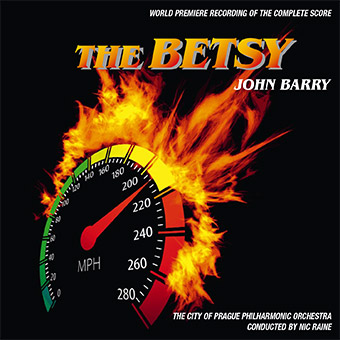
John Barry - The Betsy
Tolles, Barry-typisches Hauptthema und wirklich sehr gut eingespielt. Nic Raine trifft den typischen Barry-Sound sehr gut. Hat er wohl bei ihm als Orchestrierer gelernt.
-
Und nochmal Terence Hill:
Ich bin zwar nicht so der Zeichentrick-Batman-Schauer, aber diese schicke Box habe ich mir dann doch mal gegönnt. Bis zum Wochenende war sie bei Amazon auch im Angebot für 50 Euro (mittlerweile wieder 70 Euro). Darin enthalten sind neun Batman-Filme auf Blu-ray:
Inhalt: 9 DC Universe Batman Blu-Rays:
Batman: Gotham Knight
Batman: Under the Red Hood
Superman/Batman: Apocalypse
Batman of the Future:Joker Kommt
Batman: Year One
Batman: Dark Knight Returns, Teil 1
Batman: The Dark Knight Returns, Teil 2
DCU: Son of Batman
Batman: Assault on Arkham -
Ridley Scott führt nun doch nicht Regie beim neuen BLADE RUNNER:
Ridley Scott says that he won't direct the planned Blade Runner sequel, although the project is still moving forward with a new helmer expected to be announced shortly.
Harrison Ford is expected to return as Rick Deckard with production tentatively planned for 2015. What's more, Scott reveals some potentially spoilery details about Deckard's character arc.
-

Music Composed by Fabbio Frizzi
Beat Records
2-CD
An album that takes a picture of the arrival on the stage, after so many years, of a repertory beloved by many fans around the world. With his cinema, Fulci inspired this music, written and created to narrate his stories, his characters. Frizzi 2 Fulci was the tribute I owed him, together with my gratitude.
Fabio Frizzi
On October 31, 2013, the Frizzi 2 Fulci show premiered in London at one of the city’s live music meccas: Union Chapel. On the stage, the Maestro conducted the F2F band and the Alauda Quartet, and in the church, more than 1000 people attended the sold-out event while people outside desperately looked for a ticket. It’s a snapshot of a memorable evening of great music and cinema in front of an hallucinating and hallucinated crowd made of spectacular phantoms, skeletons, zombies, witches, golems, vampires and a plethora of assassins and victims: a magical moment possible only in the most haunted land of all time: England.
But, there is a “but”… Everything was filmed and recorded with extreme precision, and now, finally, one year later, we announce what everybody has been waiting for: a live recording of an epochal concert, and such an event deserved our maximum efforts.
We are proud to present this double-CD release featuring the maestro’s amazing music dedicated to Italian horror cinema, not to mention some tasty digressions and righteous tributes whose common denominator is the music created by him for the films of the great director Lucio Fulci.
You will enjoy more than 80 minutes of music, a 16-page booklet full of photos of the event, memorabilia and a track-by-track analysis by Maestro Frizzi. As a tribute both to the event location and to the quality of this production, Beat Records remastered the program at the mythical Abbey Road Studios in London.
It’s an album that will allow you to experience the final standing ovation of an awesome and improbable Halloween crowd through your personal high-fi, disturbing presences pouring from its woofers…
Daniele De Gemini
CD 1
1. Bunny love song 1:24
2. Silver Saddle 1:43
3. Chaco 1:53
From the original soundtrack: MANHATTAN BABY
4. Baby sequence 1 2:04
5. Baby sequence 2 2:09
6. Baby sequence 5 2:24
7. Baby sequence 3 1:50
From the original soundtrack: SETTE NOTE IN NERO
8. Sette note in nero 6:48
From the original soundtrack: ZOMBI 2
9. Zombi 2 8:55
Miscellaneous vocal cues
10. Movin’ on 2:38
11. Let us pray 2:00
12. Was it all in vain 2.29
13. With you 2:03
14. Silver Saddle 2:30
TT 40:57
CD 2
From the original soundtrack: PAURA NELLA CITTA' DEI MORTI VIVENTI
1. Paura nella città dei morti viventi 9:57
From the original soundtrack: BEWARE OF DARKNESS
2. Rusty Games 2:14
From the original soundtrack: THE WEEPING WOMAN
3. The weeping woman 3:12
From the original soundtrack: LUCA IL CONTRABBANDIERE
4. Luca il contrabbandiere 4:56
From the original soundtrack: UN GATTO NEL CERVELLO
5. Un gatto nel cervello 6:05
From the original soundtrack: AMARCORD
6. Amarcord 4:34
From the original soundtrack: … E TU VIVRAI NEL TERRORE: L'ALDILA'
7. Suono Aperto 1:26
8. Oltre la soglia 1:59
9. Verso l’ignoto 1:49
10. Voci dal nulla 3:28
TT 39:44
-
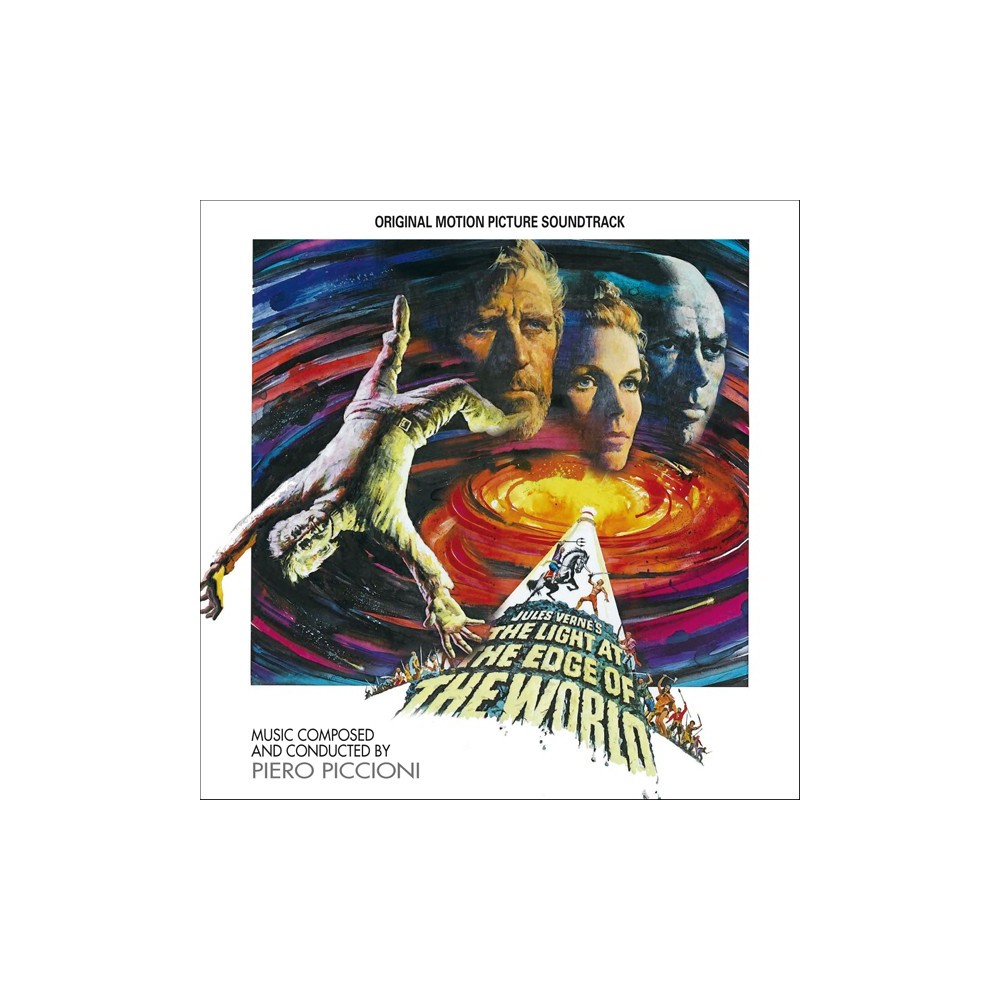
Music Composed by Piero Piccioni
Quartet Records - Limited Collector's Edition of 500 copies
Quartet Records and GDM present the fully remastered reissue of a classic score by Piero Piccioni (More Than a Miracle, Fumo di Londra, Bora Bora) written in 1971 for Kirk Douglas’ The Light at the Edge of the World (aka Il faro in capo al mondo).
This British-USA-Italian coproduction was directed by Kevin Billington and produced by Kirk Douglas together with Alexander and Ilya Salkind. The Light at the Edge of the World is based on the posthumously published novel of Jules Verne. The story takes place at the southernmost tip of Latin America where American refugee Denton is tasked with operating a lighthouse. When the men of ruthless pirate captain Kongre (Yul Brynner) invade his island, Denton retreats to the interior, hatching a scheme to defeat the captain and stop the massacre. Though it’s a cult favorite now, The Light at the Edge of the World was a relative failure at the box office as the film was simply too tough and uncompromising for a family adventure (as most Verne films were marketed across the world).
The music by Piero Piccioni is one of the composer’s own personal favorites and his care for the project shines through the music. The score has a rich thematic vein, featuring distinct themes for Denton, the island, the pirates and a former romance that haunts him to this day. Though Piccioni wrote a lot of music for the film, many cues were truncated when the picture lost about 20 minutes from its running length. Now you can hear the whole score in excellent quality, remastered by Claudio Fuiano from the first-generation master tapes.
The new edition by Quartet Records begins with the original album program from 1971 and is followed by an assortment of bonus tracks, including two organ cues performed by Piccioni himself. The full-color 12-page booklet includes liner notes by Gergely Hubai, who discusses the making of the film and the score, including the various cuts made to the story and the music.
THE ORIGINAL ALBUM
01. Ouverture (3:41)
02. Arabella (3:22)
03. L’Isola Misteriosa (4:23)
04. Jeux de Massacre (4:04)
05. Denton’s Flashbacks (4:51)
06. Love Affair (4:44)
07. Kongre (4:07)
08. The Light (2:50)
FILM VERSIONS
09. The Light (Main Titles) (2:13)
10. Love Affair (Emily Jane’s Theme) (5:26)
11. The Light (Love & Menace) (4:51)
12. The Light (Approaching the Island) (1:56)
13. The Light (Denton’s Theme - Solo Organ) (2:25)
14. The Light (Discovering the Island) (4:51)
15. The Light (Emily Jane’s Theme # 2 - Solo Organ) (2:20)
16. The Light (Kongre’s Attack) (2:27)
17. Love affair (Emily Jane’s Theme # 3) (3:29)
18. The Light (Denton’s Revenge) (3:15)
19. Love Affair (Emily Jane’s Theme # 4) (2:31)
20. The Light (Finale & End 7itles) (4:41)
Total Disc Time: 73:19
-

Music Composed by Gianni Ferrio
Quartet Records - Limited Collector's Edition of 500 copies
2-CD
At last! Quartet Records, in collaboration with Cinevox Records and the Gianni Ferrio Estate, is proud to present a remastered and expanded release in a limited edition 2-CD set of this famous score by Gianni Ferrio (Vivi o preferiblemente morti, Un dollaro bucato, Tony Arzenta). The 1973 Italian-French-Spanish film adaptation of the immortal novel by Jules Verne (The Mysterious Island of Captain Nemo – aka L’Isola Misteriosa e il Capitano Nemo) was directed by J.A. Bardem (Calle Mayor, Les pianos mecaniques) and starred Omar Sharif as Captain Nemo.
Gianni Ferrio provides a classy and colorful, dynamic score, dominated by a memorable theme and gloomy action passages. It is full of enigmatic and suggestive romanticism and one of the most deservedly famous scores of his career. The collaboration of I Cantori Moderni di Alessandroni and the fascinating voice of Edda Dell’Orso is one of the most appealing aspects of the score, but not the only noteworthy feature in a work generous in thematic diversity with many delights to be discovered.
The soundtrack album of The Mysterious Island of Captain Nemo was released in 1973 in Italy by the Cinevox label with 12 tracks and a running time of 37 minutes. In 1997 the premiere CD release (in Germany only) included the album program plus five minutes of unreleased music found on the Cinevox album masters. Collectors around the world have sought the complete score without success—until now. This special double-disc set, carefully mastered by Claudio Fuiano and José Luis Crespo, is possible thanks to Alba Ferrio, the composer’s widow, who fortunately kept the complete mono sessions of the score in her husband’s private archives. Now, thanks to this recent discovery, this project has become a reality. Even though the tapes were slightly damaged (specially track 22), we are lucky that it has all survived.
The package includes a 12-page full-color booklet including liner notes by Ángel García Romero.
DISC 1. THE ORIGINAL ALBUM (Stereo)
01. L´Isola misteriosa (3:24)
02. I naufraghi dell´aria (2:11)
03. Le avventure di top, cane fedele (3:39)
04. Il capitano Nemo (3:46)
05. La solitudine di naufraghi (2:55)
06. La nave dei pirati (2:56)
07. Il mistero dell´isola (4:36)
08. Il Nautilus (2:12)
09. I gabbiani dell´isola (3:02)
10. La ballata del marinaio Pencroff (3:33)
11. Nel buio della notte (1:51)
12. Le ultime ore del capitano (4:02)
Alternate takes (stereo)
13. L´Isola misteriosa (Alternate main titles) (2:13)
14. I naufraghi dell´aria (Finale take B )(1:38)
15. L´Isola misteriosa (A beautifully strange island) (2:51)
Total Disc One Time: 45:26
DISC 2. THE FILM SCORE (Mono)
01. L´Isola misteriosa (Main Titles) (1:36)
02. L´Isola misteriosa (Ballad of Sailor Pencroff) (3:34)
03. L´Isola misteriosa (A dog in the Fort) (1:48)
04. L´Isola misteriosa (Escape in a Ballon) (2:13)
05. L´Isola misteriosa (Strange New World) (1:10)
06. L´Isola misteriosa (Apparent Calm) (3:35)
07. L´Isola misteriosa (Top, the Dog) (1:41)
08. L´Isola misteriosa (Explorers) (1:37)
09. L´Isola misteriosa (Sail) (1:44)
10. L´Isola misteriosa (Dangerous Waiting) (1:03)
11. L´Isola misteriosa (A Boy and His Dog) (1:46)
12. L´Isola misteriosa (Nemo’s lLneliness) (1:25)
13. L´Isola misteriosa (Escape and the Island Theme) (1:09)
14. L´Isola misteriosa (The Nautilus) (1:34)
15. L´Isola misteriosa (Submersion) (1:42)
16. L´Isola misteriosa (Underwater Suspence) (2:09)
17. L´Isola misteriosa (Nemo’s Hindu Music) (2:08)
18. L´Isola misteriosa (A Bunch of Heroes) (1:17)
19. L´Isola misteriosa (Mysteries and Dangers) (1:21)
20. L´Isola misteriosa (The Journey) (1:09)
21. L´Isola misteriosa (Living Island) (2:26)
22. L´Isola misteriosa (Adventures) (1:00)
23. L´Isola misteriosa (Ancient Secret) (2:10)
24. L´Isola misteriosa (Nemo Theme) (1:33)
25. L´Isola misteriosa (Heroes Theme) (1:48)
26. L´Isola misteriosa (Nemo’s World) (2:20)
27. L´Isola misteriosa (Escape Plans) (1:39)
28. L´Isola misteriosa (Nemo’s Goodbye) (2:13)
29. L´Isola misteriosa (Volcano’s Explosion and Destruction of Nautilus) (3:47)
30. L´Isola misteriosa (End Titles) (1.50)
Total Disc Two Time: 58:01
Total Disc Time: 103:27



Eure Errungenschaften (Der musikalische Rest)
in Der musikalische Rest
Geschrieben
Dritte und letzte Box der Hörspielreihe nach dem Büchern von Timothy Zahn. Natürlich wieder mit den originalen Sprechern, Geräuschen und der Musik aus den Filmen.
Das Letzte Kommando-Box-Das komplette Hörspiel auf 5 CDs Box-Set